How to Screen Multiple CRE Deals at Once with AI
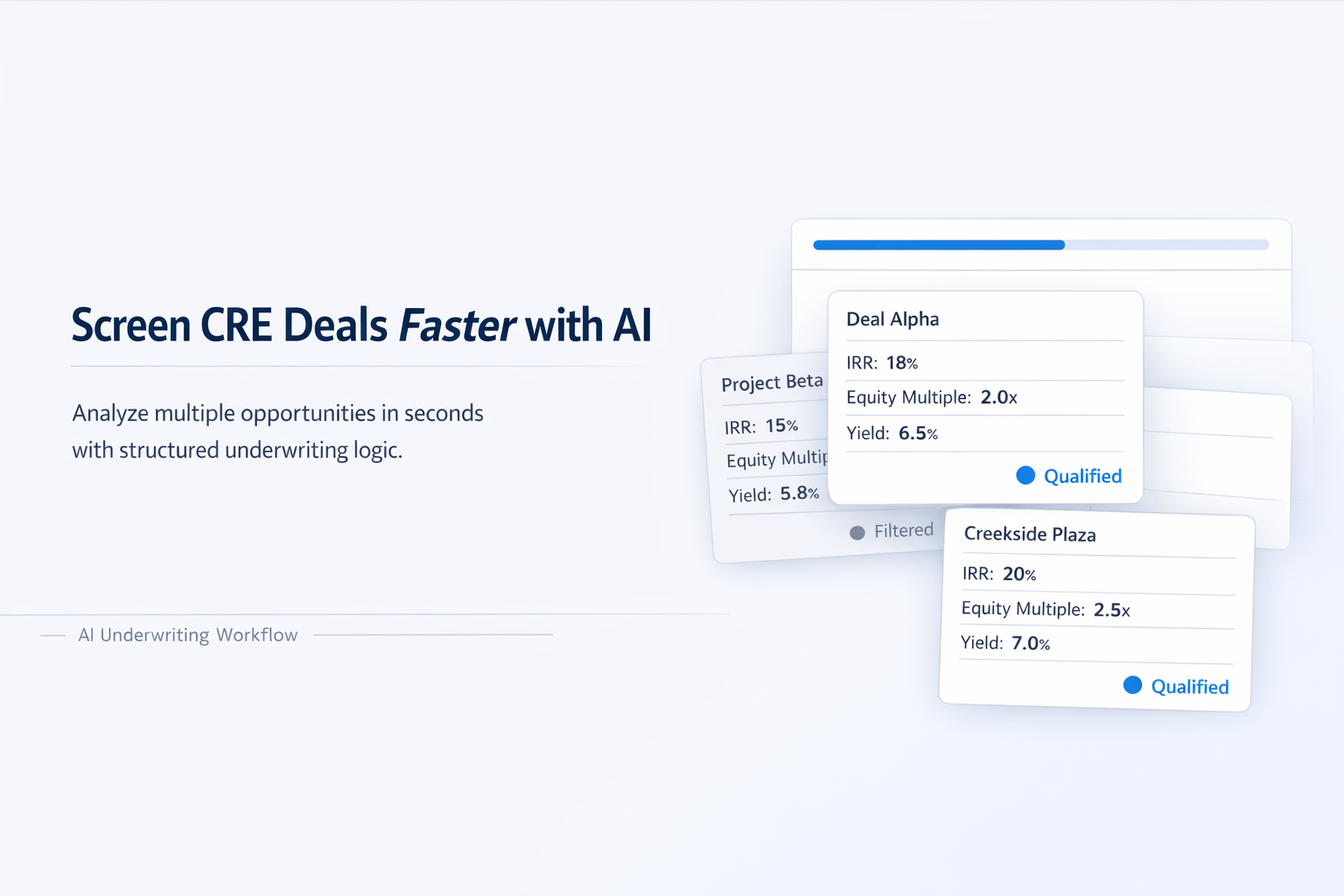
Acquisitions teams have a throughput problem. You get 10 OMs in your inbox on Monday morning, but your analyst can only underwrite a few deals per day. As a result, opportunities go stale before you even review them, which is exactly the problem parallel AI deal underwriting is designed to solve.
Instead of processing deals one by one, parallel AI deal underwriting allows you to analyze multiple opportunities simultaneously using the same assumptions, models, and methodology. Therefore, deal flow becomes faster, more consistent, and far more scalable.
The Throughput Problem in CRE Acquisitions
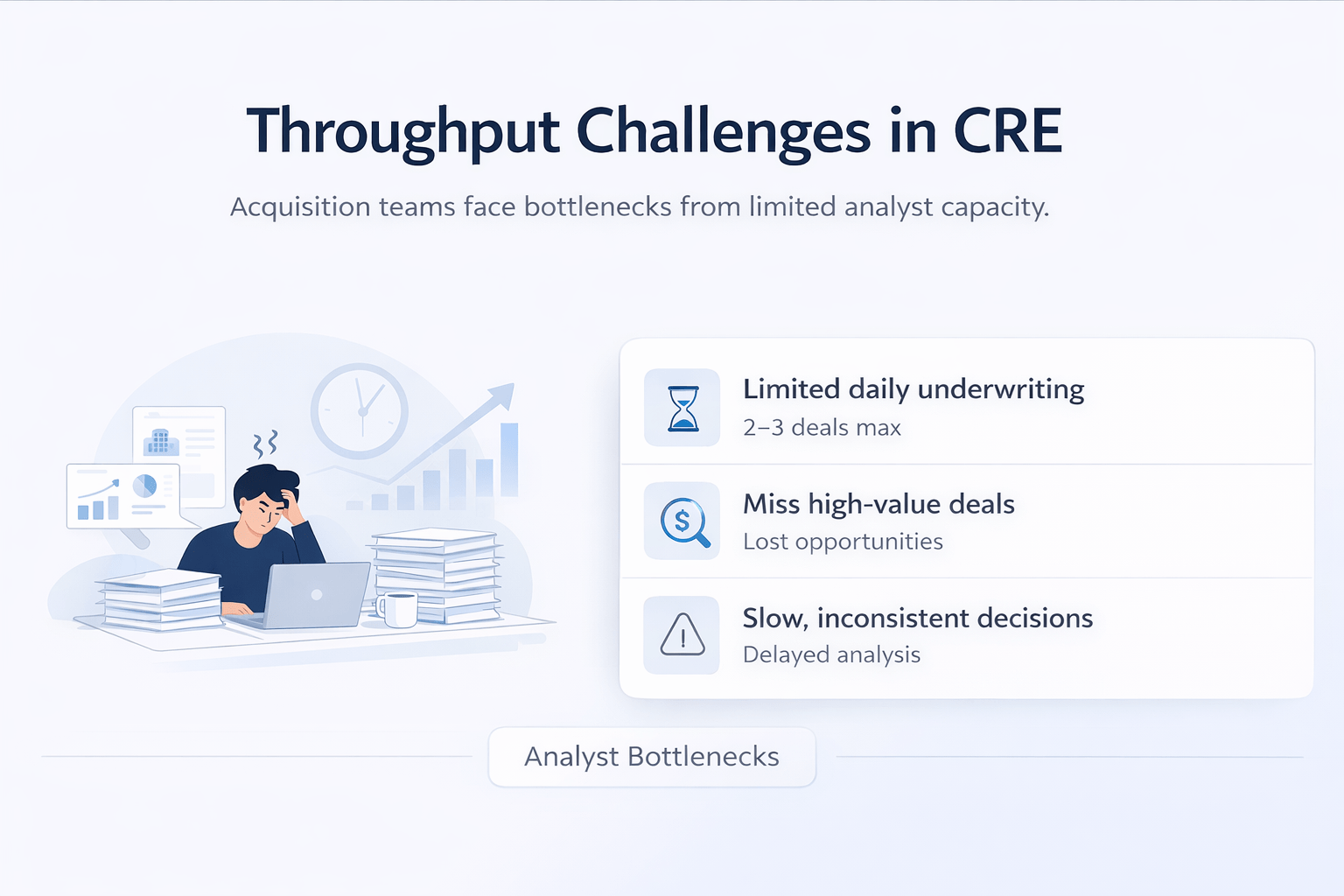
Most acquisition teams face the same bottleneck: limited analyst capacity.
Common Challenges
- Only 2–3 deals can be underwritten per day
- High-value opportunities may be missed
- Inconsistent analysis across deals
- Delayed decision-making
As a result, teams often spend too much time on deals that are not worth pursuing while missing stronger opportunities.
The Solution: Parallel AI Deal Underwriting
Instead of analyzing deals sequentially, parallel AI deal underwriting allows teams to process multiple deals at the same time.
The concept is simple:
- Use a standardized underwriting workflow
- Apply the same criteria across all deals
- Run multiple pipelines simultaneously
This approach ensures that every deal is evaluated consistently while dramatically increasing throughput.
The Setup: One Skill, Multiple Deals
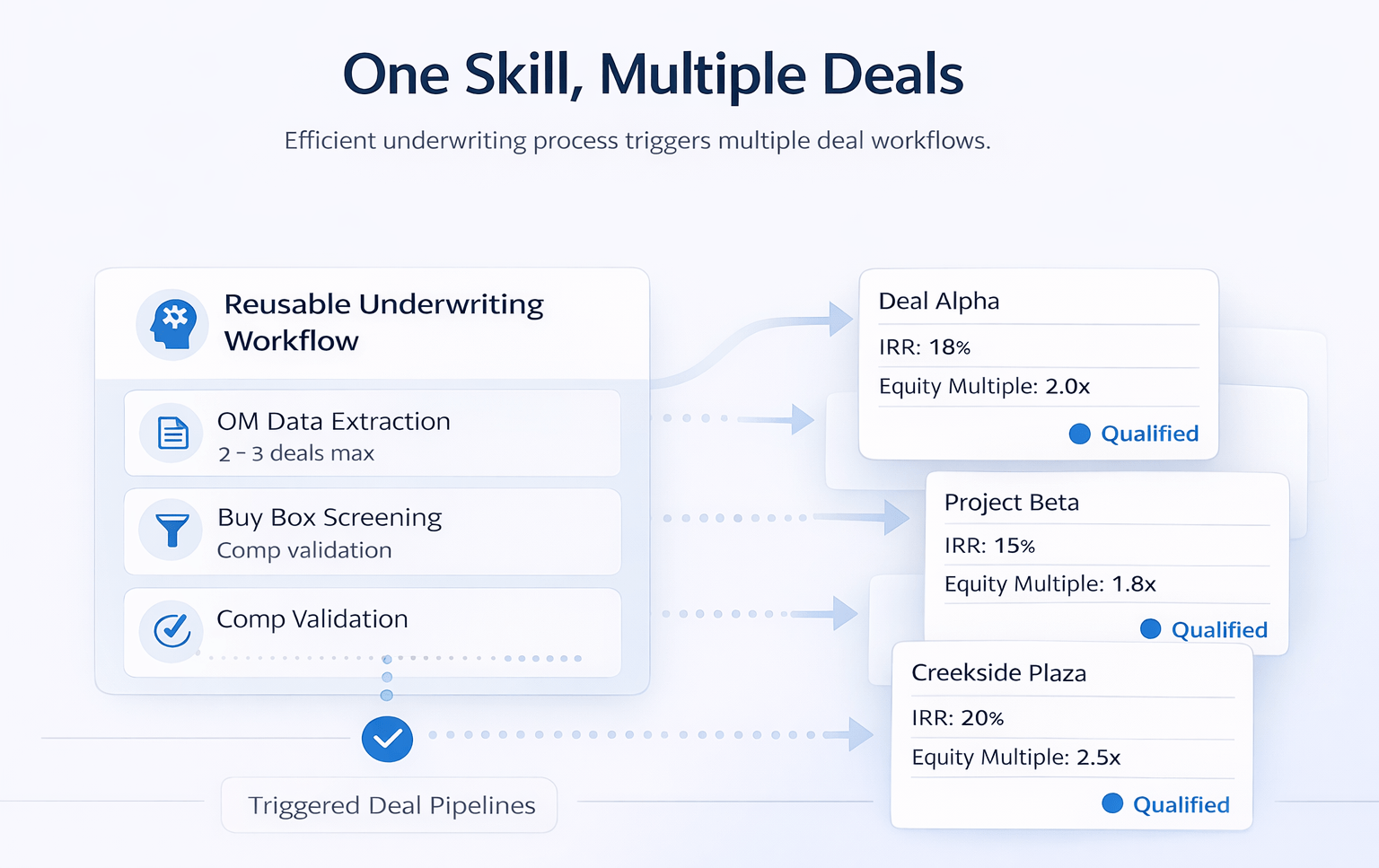
To test this, a reusable underwriting workflow (skill) was built using Claude Cowork. This workflow runs an 8-step pipeline whenever an OM is uploaded.
Pipeline Steps
- OM data extraction
- Buy box screening
- Comp validation
- Regulatory risk analysis
- Unit-by-unit buyout analysis
- Underwriting model population
- Target price recommendation
- IC memo generation
The key insight is that this same workflow can be triggered in multiple sessions at once, allowing parallel execution.
Real Test: Two Deals at the Same Time
Two completely different deals were analyzed simultaneously to test performance.
Deal 1: 7-Unit Long Beach (Vacant Delivery)
- Asking price: $3.9M
- Flagged above the buy box threshold
- Recognized as a vacant delivery scenario
- Buyout analysis skipped automatically
Final Output:
- Recommended purchase: $2.68M
- Rating: Strong Pursue
- Discount: 31% below asking
Deal 2: 16-Unit Rent-Controlled Property
- Asking price: $3.1M
- Built in 1916 with regulatory constraints
- Full buyout analysis executed
Key Insight:
- $850 rent delta → ~$36K buyout
- $400 rent delta → ~$18K buyout
Final Output:
- Recommended purchase: $1.98M
- Rating: Conditional Pursue
- Discount: 36% below asking
Both deals were processed simultaneously with full outputs.
What Made Parallel Underwriting Work
Several factors enabled this system to perform effectively.
Key Advantages
- Consistent methodology: Same assumptions across all deals
- Adaptive logic: Workflow adjusts based on deal type
- Parallel execution: Multiple deals run without delays
As a result, teams can compare deals accurately without variability.
Where It Fell Short
Although powerful, the system is not perfect.
Limitations
- Initial formatting mismatches required adjustments
- Complex workflows increased processing time
- Context limits affected performance in longer runs
- Outputs still require manual verification
Therefore, this is a “trust but verify” system—not fully automated decision-making.
Impact on Deal Flow Management
The biggest benefit of parallel AI deal underwriting is improved throughput.
Time Comparison
| Metric | Traditional Workflow | Parallel AI Workflow |
|---|---|---|
| Deals per Week | 5–10 | 20+ |
| Analyst Hours | 40–80 hours | Significantly reduced |
| Consistency | Variable | Standardized |
| Speed | Slow | High |
Instead of spending hours on every deal, teams can focus only on the top opportunities.
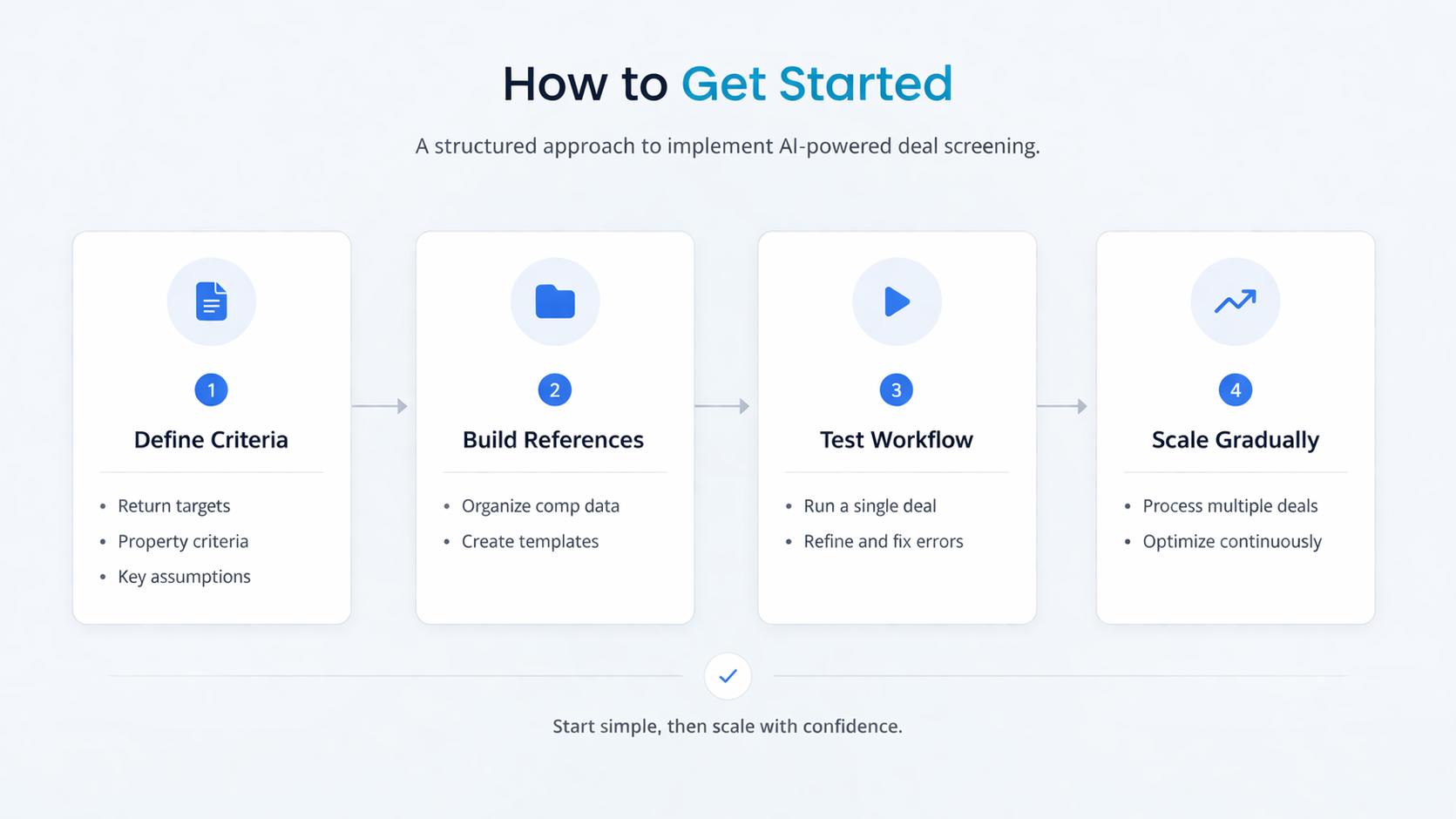
How to Get Started
If you want to implement this approach, follow a structured process.
Step-by-Step Approach
Define your criteria document
- Include return targets
- Add property criteria
- Document all assumptions
Build reference files
- Organize comp data
- Prepare underwriting templates
Start with one workflow
- Test on a single deal
- Fix errors and refine outputs
Scale gradually
- Run multiple deals in parallel
- Continue optimizing the workflow
This method ensures a smooth transition without overwhelming your system.
FAQs Regarding Parallel AI Deal Underwriting
What is parallel AI deal underwriting?
It is the process of analyzing multiple deals simultaneously using AI.
- Uses standardized workflows
- Applies consistent assumptions
- Improves speed
Conclusion: It increases deal evaluation efficiency.
https://www.mckinsey.com
How does it improve deal flow?
It increases the number of deals analyzed.
- Faster screening
- Better prioritization
- Reduced delays
Conclusion: It helps capture more opportunities.
https://www.forbes.com
Is it accurate?
Accuracy depends on inputs and setup.
- Strong assumptions improve results
- Requires validation
- Improves over time
Conclusion: Reliable when properly configured.
Can it replace analysts?
No, it enhances analyst productivity.
- Automates repetitive work
- Supports decisions
- Reduces workload
Conclusion: Analysts remain essential.
https://www.asce.org
What tools are needed?
AI workflow platforms are required.
- Claude Cowork
- Data sources
- Underwriting models
Conclusion: Tools enable automation.
https://www.anthropic.com
Does it work for all property types?
Yes, with customization.
- Multifamily
- Commercial assets
- Mixed-use
Conclusion: Adaptable across asset classes.
https://www.nar.realtor
What are the limitations?
There are still technical constraints.
- Context limits
- Setup time
- Need for validation
Conclusion: Not fully autonomous yet.
https://www.gartner.com
How long does setup take?
Initial setup takes a few hours.
- Build workflows
- Test outputs
- Refine processes
Conclusion: Time investment leads to scalability.
https://www.techcrunch.com
Build a Scalable Deal Screening System
Join AI for CRE, where 663+ CRE professionals are already using parallel AI workflows to scale deal screening, eliminate bottlenecks, and standardize underwriting across their pipeline. Access real demos, skill templates, and step-by-step systems that show exactly how to move from manual underwriting to a scalable, automated workflow.
Instead of missing deals or relying on inconsistent analysis, you can build a system that evaluates every opportunity quickly and accurately.