

Perplexity Pro for CRE Market Research
Perplexity Pro CRE Research is changing how CRE professionals handle market analysis tasks that nobody enjoys. You’re pulling data from CoStar, cross-referencing census figures, checking city planning docs, scanning transaction databases, and trying to stitch it all together into something coherent. A solid market package takes a full day. Sometimes two.
I tested Perplexity Pro’s research mode on a straightforward task: build a comprehensive multifamily market analysis for Los Angeles. One prompt, one tool, 3 minutes. Here’s what happened and whether it’s actually useful for CRE professionals.
Table of Contents
TogglePerplexity Pro CRE Research: What Research Mode Does
Perplexity Pro has a dedicated research mode that works differently from a standard AI chat. When you hit the Research button, it scans the internet broadly — my run pulled from 127 different sources — and compiles the findings into a structured, sourced report.
You’re not getting a ChatGPT-style response based on training data. You’re getting an internet research report with live data and citations for every claim.
For CRE professionals, this matters. Market data changes quarterly. You need current numbers, not information from the model’s training cutoff.
The Prompt Strategy
Here’s how Perplexity Pro CRE Research structured a multifamily market analysis in minutes:
I did something simple but effective: I used Perplexity itself to write the research prompt. Told it I wanted a comprehensive market analysis for multifamily real estate in LA and asked it to draft a thorough prompt.
It wrote a detailed prompt covering rental trends, vacancy, absorption, comparable sales, cap rates, construction pipeline, zoning, regulatory environment, walkability, employment, and income trends.
You get out what you put in. A vague “tell me about LA apartments” prompt gives you a vague report. A specific prompt listing every metric you want gives you a thorough one. Spending 2 minutes on the prompt makes the 3-minute research run dramatically better.
What the Report Covered
The output was genuinely thorough. Here’s the breakdown:
Rental and Vacancy Data
Asking vs. effective rents broken down by property class (A, B, C) with charts. 2025 data. Average asking rents with vacancy overlays. The charts were presentation-ready — not the ugly default visualizations you’d expect.
Absorption and Demand
Net absorption trends with linked sources. The report noted that net absorption has declined substantially, which tracks with what I’m seeing in the market.
Comparable Sales
Average sales price per unit declined 10% year over year. Median sales price included, transaction volume data. The freshest data was Q2 (Q3 was still being compiled at the time of my search). That’s about as current as you’ll get from any source.
Cap Rates
Full cap rate environment breakdown with visualizations. These charts were some of the best I’ve seen from an AI tool. Clean, labeled, and actually useful for presentations.
Construction Pipeline
Under construction has dropped substantially. Deliveries declining. Net absorption is rising. That declining supply + increasing demand dynamic is the setup every multifamily investor watches for. The report also included a three to five-year supply chain.
Zoning and Regulatory
Coverage of SB 1211 (a major regulatory development for LA multifamily). Permitting timelines included. This is the kind of local regulatory detail that usually requires reading city council minutes.
Walkability and Transit
Walkability scores by neighborhood: Hermosa Beach, Koreatown, and Miracle Mile were all scored and compared. Transit access analysis included. touch for investors evaluating location quality.
Employment and Income
Local economic data provides context for demand drivers, employee trends, income levels, and demographic patterns.
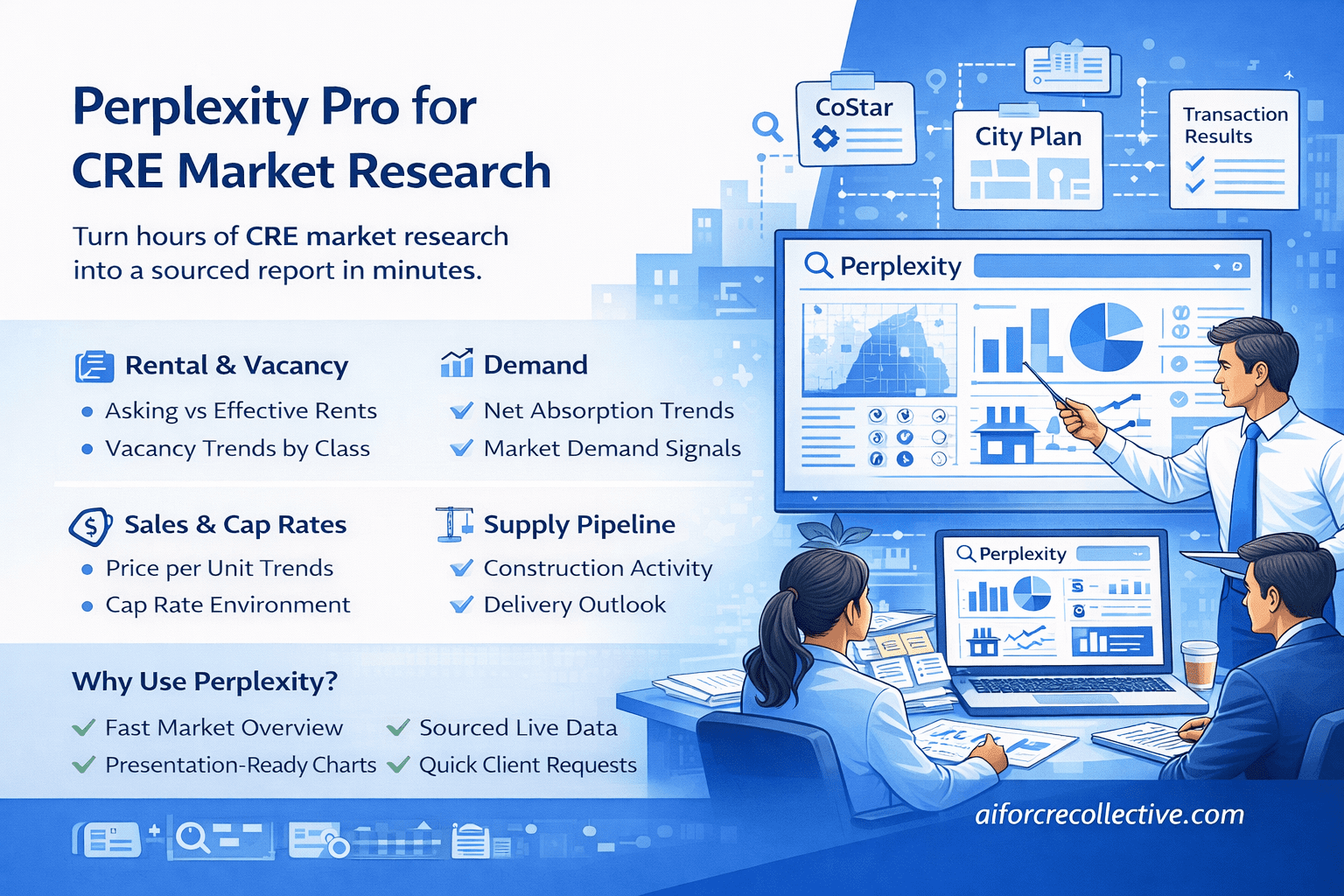
Perplexity Pro CRE Research Charts for Market Analysis
I want to emphasize this because it surprised me. The charts Perplexity generated are legitimately good. Rent trends with vacancy overlays, cap rate visualizations, construction pipeline graphs — you could screenshot these and put them directly into a client deck or offering memorandum.
Most AI tools give you walls of text. Perplexity gives you text AND visuals that actually look professional.
Perplexity vs. Claude Deep Research: Honest Comparison
I’ve tested both extensively. Here’s where each one wins:
Perplexity Pro wins on:
• Speed (3 minutes vs. 15-30 minutes)
• Visual output (charts are presentation-ready)
• Source transparency (every data point linked)
• Quick turnaround for client requests
Claude Deep Research wins on:
• Depth of analysis (significantly more thorough narrative)
• Connecting data to investment implications
• Output quality (reads like an institutional research report)
• Nuanced insights that go beyond surface-level data
If you need a fast market overview with sourced data and great visuals, Perplexity is the play. If you need a deep institutional-grade analysis, Claude is still the better option.
The smart move: use Perplexity for the quick visual overview, then run Claude Deep Research when you need the detailed deep dive, tools for different situations.
Who This Works For
• Brokers building market packages for listing presentations or client pitches
• Acquisitions teams doing preliminary market screens before committing to deeper analysis
• Investors evaluating new markets want to understand quickly
• Analysts who need sourced data points fast
Perplexity Pro CRE Research FAQs
1. What is Perplexity Pro CRE Research?
Perplexity Pro CRE Research is an AI-powered research process that gathers live multifamily market data from multiple sources to generate a structured market analysis report.
2. How does Perplexity Pro CRE Research help CRE professionals?
It helps CRE professionals by compiling rental trends, vacancy rates, cap rates, and supply pipeline data into one sourced report for faster market analysis.
3. Can Perplexity Pro CRE Research analyze multifamily investment markets?
Yes, it can evaluate rental performance, demand trends, and comparable sales data for multifamily real estate markets.
4. Does Perplexity Pro CRE Research provide sourced data?
Yes, Perplexity Pro CRE Research generates reports with linked sources for each data point used in the analysis.
5. How fast can Perplexity Pro CRE Research generate market reports?
Most market research reports can be created within minutes using Perplexity Pro’s research mode.
6. Can Perplexity Pro CRE Research create charts for market presentations?
Yes, it produces visual charts for rental trends, cap rates, and supply pipeline data that can be used in client presentations.
7. Should acquisitions teams use Perplexity Pro CRE Research for deal screening?
It is useful for preliminary market screening before conducting deeper investment analysis.
8. What is the main benefit of Perplexity Pro CRE Research?
The main benefit is fast access to current, sourced market insights for CRE decision-making.
Try It Yourself
We’ve got a 12-month free Perplexity Pro link inside the AI for CRE Collective. 540+ CRE professionals are testing tools like this weekly.
For weekly breakdowns of AI tools and workflows for commercial real estate, subscribe to the newsletter. 3,000+ CRE professionals get it every Thursday.